Custom homes built for Deadwood, SD.
iLevel Construction builds engineering-disciplined custom homes in Deadwood and across Lawrence County. Documented preconstruction, transparent cost-plus pricing, and a project manager on every jobsite multiple times each week.
Custom home building in Deadwood.
Deadwood is historic gold-rush country tucked into a steep gulch. Hillside custom homes here demand careful site work, a builder who knows the local permitting and historic-district overlays, and engineering that respects the slope. Lots are typically narrow and steep, which puts foundation, drainage, and access-road work at the center of the preconstruction scope. We have built in the gulches around Deadwood and understand the review process.
Deadwood lots are typically narrow, steep, and tucked into the gulches. Many fall inside the National Historic Landmark district with additional review requirements. Acreage lots in the surrounding country offer more flexibility but still face high-country engineering. Lot purchase due diligence matters in Deadwood more than in most of our markets.
Deadwood custom builds are usually historic-area infill, hillside replacement homes, or country acreage builds in the surrounding hills. Owners are often Black Hills locals making a long-planned upgrade, plus the occasional out-of-state owner attracted to the historic character of the town itself.
Deadwood is 30 minutes from Belle Fourche. Our PM is on active Deadwood jobsites multiple times each week. Narrow gulch access affects how material gets staged and delivered, which we plan around. Historic-district inspection coordination is handled directly by iLevel on the owner’s behalf.
The gulch geometry is the whole story on a Deadwood build, and it starts with getting materials to the site at all. A lot wedged between the road and a hillside rarely has room to park a lumber truck, a crane, and a stack of trusses at the same time, so the delivery sequence has to be planned like a chess game. We schedule the big drops for the phases that need them, stage the rest off site, and coordinate the tight windows when a boom truck can actually set framing before the road has to clear. That planning happens in preconstruction, on paper, which is why a Deadwood jobsite that looks impossibly cramped still runs on schedule. The alternative, which we have watched other builders live through, is a crane sitting idle at a hundred-something an hour because the trusses that should have been there yesterday are stuck behind a delivery truck that could not turn around.
Water is the second thing the slope forces you to solve. Everything above a gulch lot drains toward it, and spring runoff coming off the surrounding hills will find any weakness in a foundation or a grade that was not engineered for it. So the drainage design gets the same attention as the structure: subsurface collection, surface routing, retaining that holds the hillside back and moves the water past the house instead of into it. On a historic-district infill lot the aesthetic guidelines and the engineering have to agree, and settling both in the drawing set is exactly the kind of problem the founder’s engineering background exists to handle. Get it right on paper and the home sheds a century of Deadwood weather the way it should.
Six things that shape every Deadwood build.
Lot character
Deadwood lots are typically narrow, steep, and tucked into the gulches. Many fall inside the National Historic Landmark district with additional review requirements. Acreage lots in the surrounding country offer more flexibility but still face high-country engineering. Lot purchase due diligence matters in Deadwood more than in most of our markets.
Build profile
Deadwood custom builds are usually historic-area infill, hillside replacement homes, or country acreage builds in the surrounding hills. Owners are often Black Hills locals making a long-planned upgrade, plus the occasional out-of-state owner attracted to the historic character of the town itself.
Site work
Site work in Deadwood gulches is significant. Retaining, drainage, slope-adjusted foundations, and engineered access roads or staircases are typical. Historic-district lots may require additional site protection during construction. The full scope is addressed during preconstruction so nothing surprises the cost-plus mid-build.
Access & logistics
Deadwood is 30 minutes from Belle Fourche. Our PM is on active Deadwood jobsites multiple times each week. Narrow gulch access affects how material gets staged and delivered, which we plan around. Historic-district inspection coordination is handled directly by iLevel on the owner’s behalf.
Permitting
Spearfish, Lead, and Deadwood each have municipal building departments with their own review timelines and inspection sequences. Rural Lawrence County permits through the county Planning office. We handle every permit submittal end-to-end so the build schedule isn’t held up by procedural back-and-forth between agencies.
Seasonality
Lawrence County has a real winter. Foundation pours generally pause December through February at higher elevations; framing and roof-in are scheduled to land before the first heavy snow. A complete custom build in Lawrence typically runs 14-18 months, with the construction calendar planned around the weather rather than fighting it.
One service, done completely.
 A 01
A 01Luxury, turnkey homes built in Deadwood. Design, preconstruction, and construction held by one accountable team from foundation to final walkthrough.
View service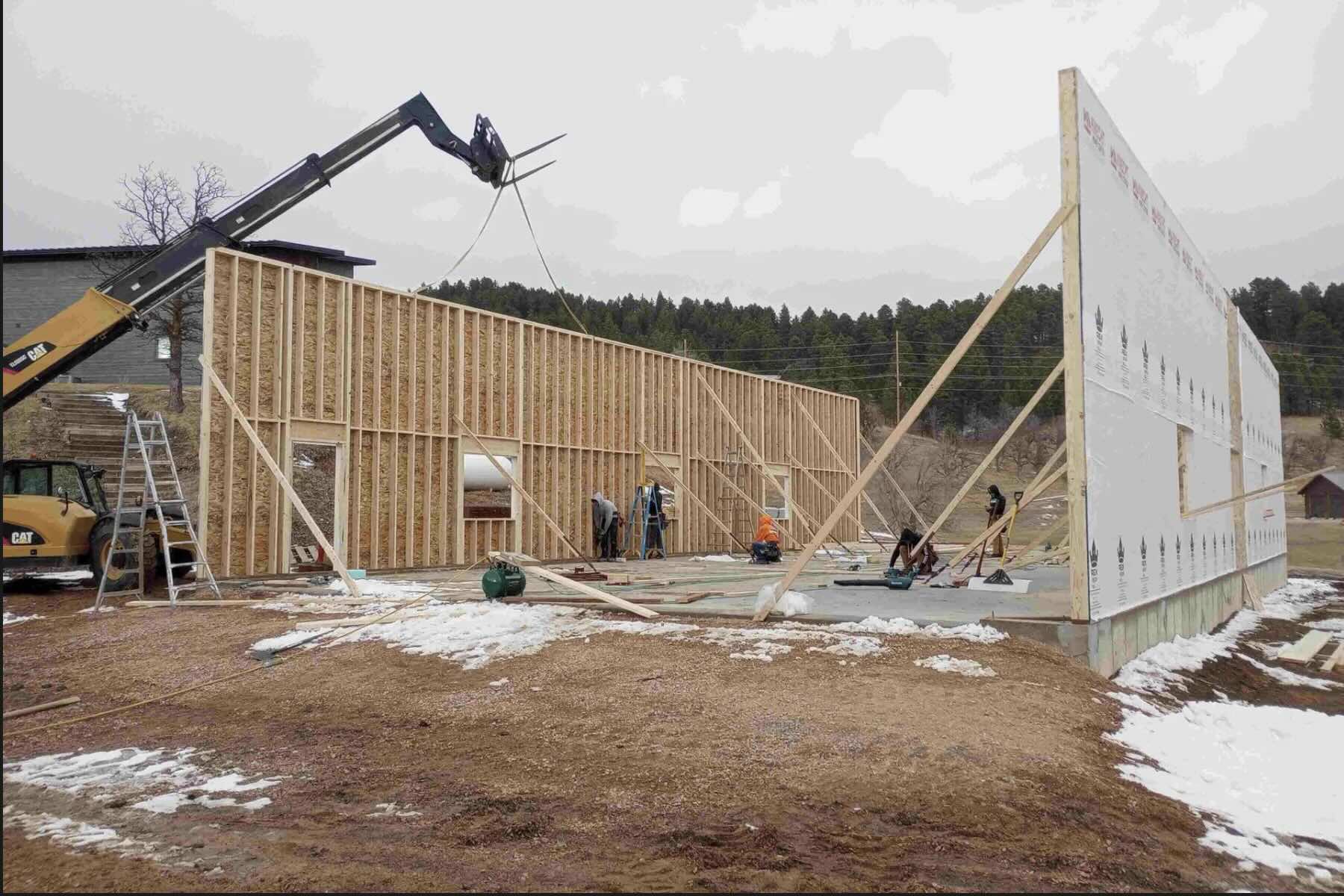 A 02
A 02Six documented phases that settle the vision, budget, and details before a board is cut. Critical for Deadwood sites where the right answer needs to be obvious before the first dig.
View process A 03
A 03Six systems carry every iLevel project, including 3D Vista scans of the framing and mechanical rough-ins. Especially valuable for owners building in Deadwood from afar.
View technologyYou have far exceeded every builder I have worked with. Your attention to detail, your honesty, and your communication made this build smooth, even from afar.
What Deadwood owners ask first.
Can you build inside the Deadwood historic district?
Yes. We understand the historic district review process and have built in the gulches around Deadwood. The design phase incorporates the district’s aesthetic and material guidelines so the home gets through review the first time without expensive after-the-fact changes.
What’s a typical Deadwood hillside foundation like?
Most Deadwood hillside builds use engineered retaining and slope-adjusted foundations. Geotechnical review is common. Drainage design handles surface and subsurface water coming off the surrounding slopes during spring runoff. None of this is unusual in Deadwood; it’s the local norm.
How does Deadwood permitting compare to Spearfish or Sturgis?
Historic-district lots take more time than Spearfish or Sturgis due to the additional review layer. Standard residential permits move quickly. We build the appropriate review timeline into the preconstruction schedule so the build calendar reflects reality.
From Belle Fourche, building across Lawrence County.
iLevel runs out of Belle Fourche, with builds in Deadwood and throughout Lawrence County. Most clients build from afar; the process is built around that.
Lawrence County overviewBuild your custom home in Deadwood.
Tell us about your land, your family, and the home you have in mind. Jason or someone on the team will be in touch within one business day.