Raising the Bar in Custom Homes
What it actually means to raise the standard on a custom home in the Black Hills. Tolerances, documentation, controlled workload, and the small handful of things that separate a generational home from a house that looks finished.
The phrase, and what we mean by it
“Raising the bar” is everywhere in this industry. It is on signs, on trucks, on business cards. It is mostly a slogan. We use the phrase carefully because the bar is a real thing, with real measurements behind it, and you can either move it up or you can leave it where it is. The decision shows up in every line of every spec and every choice made during framing and finish. It does not show up in a tagline.
For us the question is concrete. What standard are we holding the build to. What documentation are we keeping. What kinds of mistakes are we structurally prevented from making, and what mistakes are still possible because we have not yet built the system that catches them. That is the conversation we have internally on every project. It is also, in practice, the difference between a $1.4M custom home that holds up across two decades and one that looks great for the photoshoot and starts losing some of its detail by year five.
Standards we actually hold
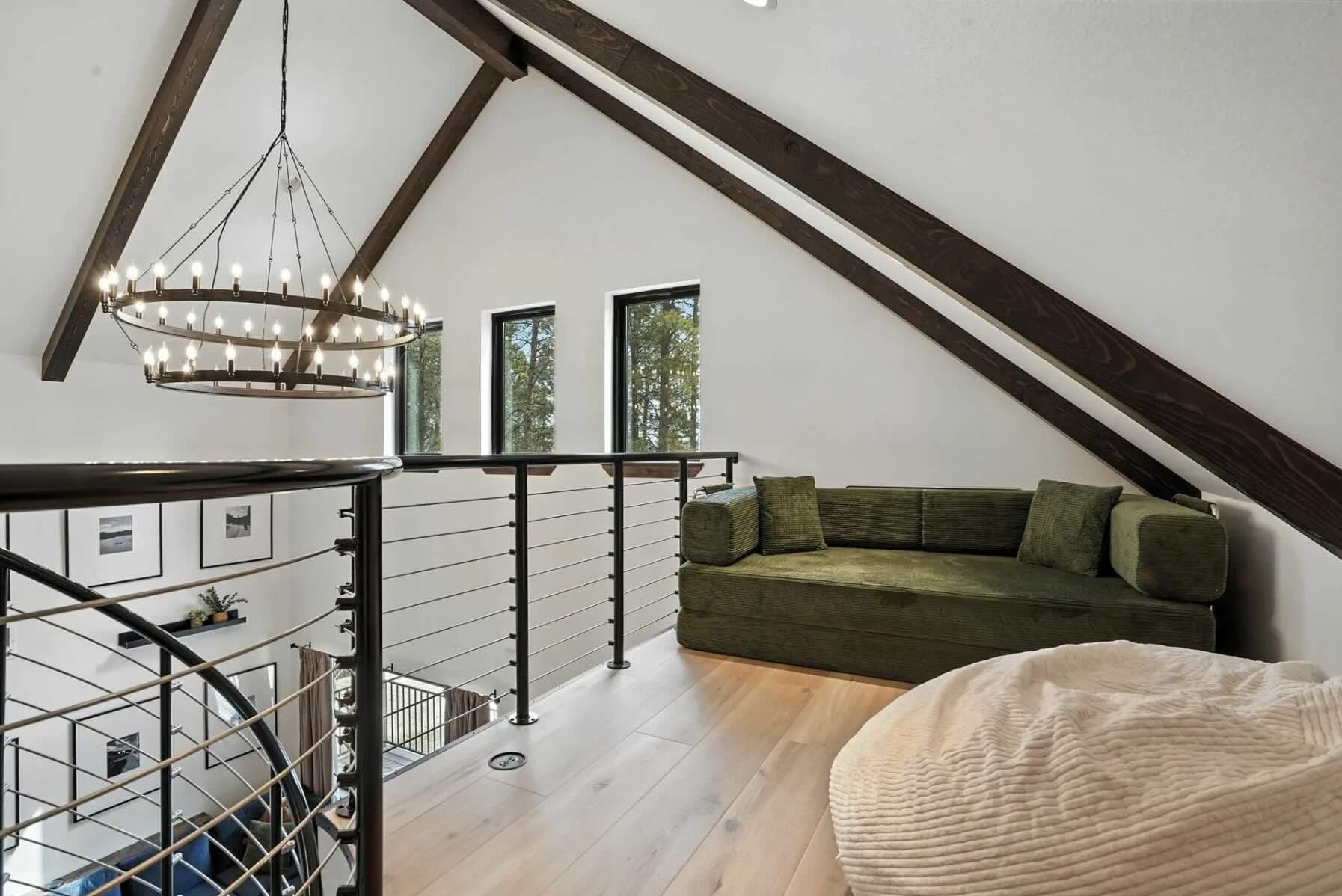
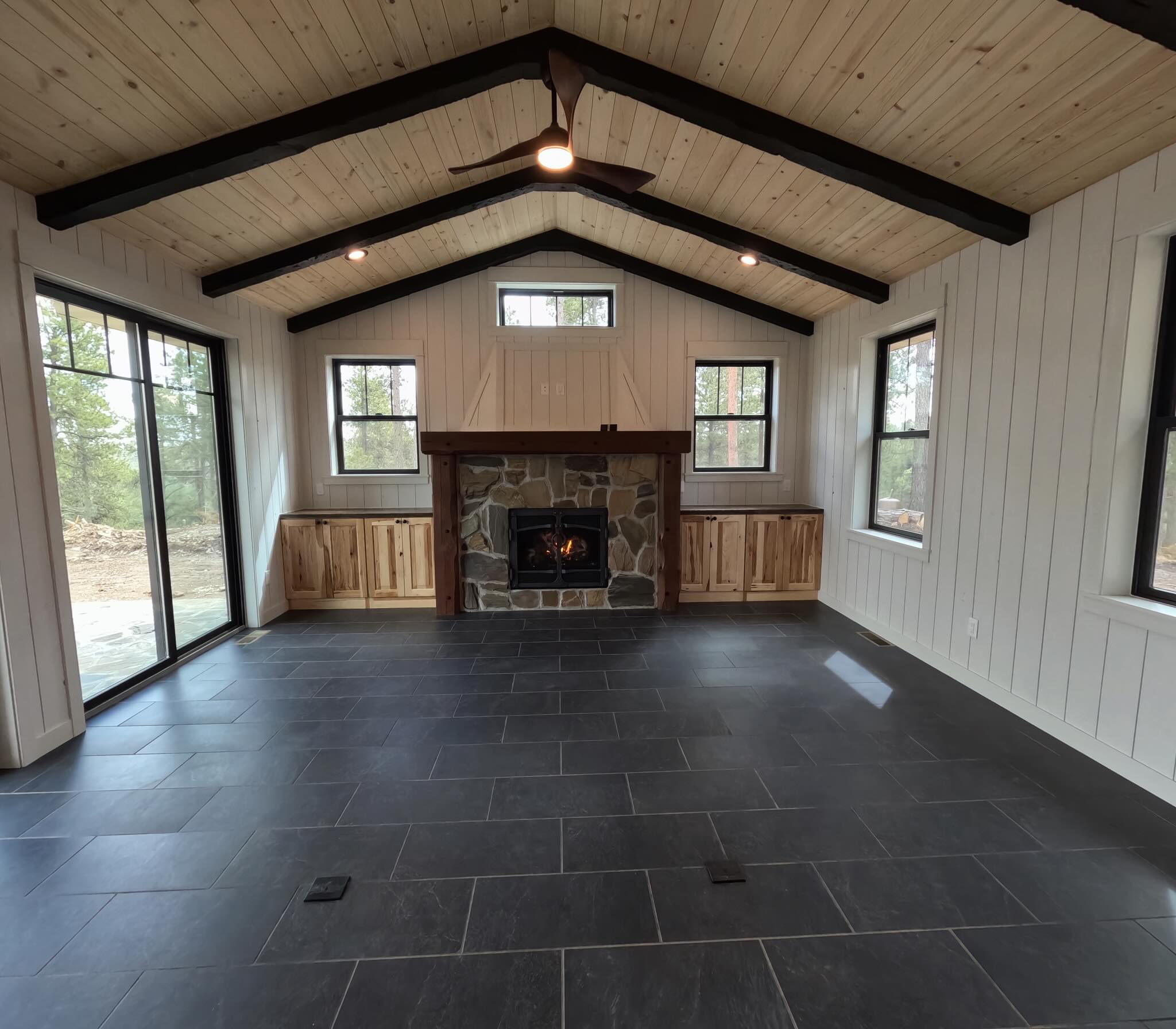
Some specifics, because the phrase is otherwise empty. Drywall tolerance for a Level 5 finish is a known spec; we hold a tighter one on long sightline walls because long sightlines under raking light show every wave. Cabinet substrate flatness is checked with a six-foot straightedge before installation, not after, because a wavy substrate becomes a wavy run of cabinets and the only fix at that point is a shim line every owner can see. Floor substrate flatness gets the same treatment before any hardwood or tile lands.
Roof systems get sized to the actual lot, not the regional generic. A Lead, SD lot at elevation may need 70 psf ground snow load capacity where the standard catalog assumption is 40. Building to 40 in country that needs 70 means the structure spends twenty years quietly working harder than it was designed to. We engineer to the actual site conditions and we document the engineering, so the math is on file decades after the boards are cut.
Mechanical scope is sized for the actual house, not for a square-footage rule of thumb. Two homes with identical floor area can have very different HVAC loads depending on glazing, orientation, ceiling volume, and infiltration. The bar we hold is a real load calculation per home, not an educated guess multiplied by a fudge factor.
The controlled workload that makes the standards possible
The most important thing we do to keep the bar high is also the simplest. We cap the number of homes we have in active construction at any moment. Four to seven, depending on phase mix. That cap exists because attention does not scale. A project manager carrying twelve active builds cannot give any one of them the kind of weekly attention that catches a small issue before it becomes a change order. A PM carrying four to seven can.
“It is the structural reason their quality looks different from ours when you take both finished houses apart five years later and look at the joints.”
This is the part of the model that does not show up in a brochure. It is a deliberate ceiling on revenue in exchange for the ability to keep our actual quality bar where we have set it. Many builders in this region can technically build a $2M custom home. Most of them are operating on a volume model that makes the kind of attention we are describing impossible. That is not a moral judgment. It is the structural reason their quality looks different from ours when you take both finished houses apart five years later and look at the joints.
Documentation is the bar that does not show up in photographs
The other thing that raises the standard, and the part owners notice the most during the build, is that the project runs on documentation. Ressio carries the budget, schedule, daily field logs, photo updates, change orders, and selections. 3D Vista carries an immersive walk-through of the framing before drywall, archived for a year so the owner can revisit any wall any time they have a question about what is behind it. Chief Architect carries the in-house design and the permit-ready CDs. Bluebeam carries plan markup with revision tracking. QuickBooks Online carries job costing with CSI division coding so the line items are visible, not aggregated into opaque categories.
That stack is in place because the alternative, decisions living in someone’s head and budgets living in a spreadsheet on a single laptop, is the most common way a custom home build quietly loses its quality bar. Things get forgotten. Selections drift. A conversation in the field gets misremembered six weeks later. A change order does not get logged and the budget impact only shows up at the next draw. We have seen all of it. The toolchain is the answer.
What the owner gets that does not fit on a contract
The contract spells out scope, schedule, cost-plus structure, and the agreements that surround them. What the contract cannot capture, and what most owners tell us about at the end, is the texture of how the build felt during the months it was running. Decisions made on real numbers. Trade-offs documented. The PM able to answer a question on the spot because the answer is in the system, not in an email thread from four weeks ago. A finished home with the math behind it, the documentation around it, and the discipline that lets the owner walk through every room knowing exactly what is behind every wall.
That is what raising the bar means at iLevel. Not the slogan. The actual day to day. The tolerances we hold, the workload we cap, the documentation we keep, and the small handful of standards that the industry treats as optional and we treat as the price of entry on a generational home.
Thinking about a Black Hills custom home?
If the way we work resonates, the first step is a preconstruction conversation. Tell us about your land and the home you have in mind. Jason or someone on the team will be in touch within one business day.